celebrateandlearn

Mar 062025
 

Alamo fell to Mexico in 1836. The Texas mission-turned-fort had been under siege since February 23, 1836. The last of the soldiers died, and General Santa Anna was victorious for a short time. Children might want to read Sherry Garland’s A Line in the Sand: The Alamo Diary of Lucinda Lawrence. They could also check an excellent website at: Alamo.

Mar 062025
 
Dred Scott

Dred Scott

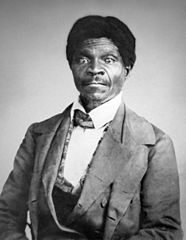
Dred Scott case decision was delivered by the Supreme Court in 1857. Dred Scott was a slave trying to gain his freedom. Since his owner had moved to states where there was no slavery and had taken Scott with him, Scott felt he should be free. He took his case all the way to the Supreme Court. The court majority ruled against Scott in a way that caused major turmoil in the United States. Some scholars believe the decision was one cause of the Civil War. Children could look at copies of original documents at: Dred Scott.

Mar 062025
 

Elizabeth Barrett Browning (born near Durham, England, 1806; died Florence, Italy, June 29, 1861) was a poet. One of her most famous works is Sonnets from the Portuguese. She was married to Robert Browning, also a famous poet. One of her most famous lines is “How do I love thee? Let me count the ways.” Children can read her works at: Project Gutenberg.

L. Gordon Cooper (born Shawnee, Oklahoma, 1927; died Ventura, California, October 4, 2004) was an astronaut. One of the original seven astronauts, he was launched into space on the last Mercury mission. He logged more hours in space than the other six astronauts combined. He was the first astronaut to sleep in space (the mission was 34 hours long). He also flew on the Gemini 5 mission with Pete Conrad. They were in space for eight days and circled the earth 120 times. Children could learn more at: L. Gordon Cooper.

Gabriel Garcia Marquez (born Aracataca, Colombia, 1927; died Mexico City, Mexico, April 17, 2014) was a writer. His books include One Hundred Years of Solitude and Living to Tell the Tale. He received the 1982 Nobel Prize in Literature.

Anna Claypoole Peale (born Philadelphia, Pennsylvania, 1791; died Philadelphia, Pennsylvania, December 25, 1878) was an artist. She was a part of the famous Peale family of artists, and she specialized in painting miniatures and still life works. Her miniature portraits were much in demand; she painted about 200 of them. Children can see several of her works at: Anna Claypoole Peale.

Chris Raschka (born Huntingdon, Pennsylvania, 1959) writes and illustrates books for children. His book Yo! Yes? received a 1994 Caldecott Honor Award. His Hello, Goodbye Window received the 2006 Caldecott Medal, and A Ball for Daisy earned him the 2012 Caldecott Medal.

Michelangelo (born Caprese, Italy, 1475; died Rome, Italy, February 18, 1564) was an artist, an architect, and a poet. Among his accomplishments are the painting of the Sistine Chapel, the sculpture Pieta, and the sculpture David. Children could visit a website at: Michelangelo. They could also read Diane Stanley’s book Michelangelo. Finally, they could learn about the rivalry between Michelangelo and Leonardo da Vinci.

Mar 072025
 

National Cereal Day is today! Many cereals are high in fiber, and some cereals are fortified with vitamins and minerals. About 49% of the US population start their day with a bowl of cereal. Around 2.7 billion boxes of cereal are sold each year. Idea: Children could create a new type of cereal. What is its name?

Mar 072025
 

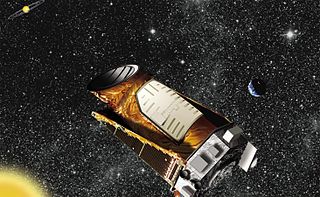
Artist’s Conception of Kepler Space Observatory

Kepler Space Telescope was launched from Florida in 2009. Named after the German astronomer Johannes Kepler, the observatory searched for earth-like planets in other parts of the galaxy. Before it was decommissioned on October 30, 2018, it had provided more information than any observatory on earth. The Kepler Space Telescope and other instruments have located at least 5312 new exoplanets. Children can participate in some interactives at: Kepler Space Telescope.

Mar 072025
 

Luther Burbank (born Lancaster, Massachusetts, 1849; died Santa Rosa, California, April 11, 1926) developed 800 new types of fruits, vegetables and flowers. He created plants that increased quality and quantity of yield. The russet Burbank potato was one of his big successes; that type of potato is the leading tuber in food processing. Children could grow their own potato plants:
1. Punch two small holes in the bottom of five paper cups.
2. Fill the paper cups about a third full with potting soil.
3. Cut a potato into sections so that each section has an eye in it.
4. Place one potato section into each paper cup and add soil to almost fill the paper cup.
5. Place the cups on an old tray with a lip. Water, and place tray where it will receive sunlight.
6. Water often and watch. Soon potato vines will appear! When Mother’s Day comes along, plant the vines outside. In the fall check for potatoes in the soil.

Amanda Gorman (born Los Angeles, California, 1998) is a poet and an activist. She read her poem, “The Hill We Climb” at President Joe Biden’s 2021 inauguration. She was the first person to read a poem at a Super Bowl when she read her “Chorus of the Captains” at Super Bowl LV, also in 2021.

Janet Guthrie (born Iowa City, Iowa, 1938) is a former race car driver. She is the first woman to qualify and race in the Daytona 500 and the Indie 500. Children can visit her website at: Janet Guthrie.

Stephen Hopkins (born Providence, Rhode Island, 1707; died Providence, Rhode Island, July 13, 1785) was a governor of the colony of Rhode Island and a signer of the Declaration of Independence. In 1764 he wrote a pamphlet called “The Rights of Colonies Examined” in response to the Stamp Act. The second oldest signer of the Declaration, he had to support his right hand with his left hand when he wrote his signature. He stated, “My hand trembles, but my heart does not.” Children could learn more at: Stephen Hopkins.

Piet Mondrian (born Amersfoort, Netherlands, 1872; died New York, New York, February 1, 1944) was an artist. He is most known for his abstract studies of color. Children could view some of his works at: Piet Mondrian.

Maurice Ravel (born Cibourne, France, 1875; died Paris, France, December 28, 1937) was a composer. One of his most famous works is Bolero, a ballet composed in 1928. Idea: Play some of his music to the class and tell students to listen for the Spanish influences or the jazz overtones.

Mar 082025
 

Howard Hathaway Aiken (born Hoboken, New Jersey, 1900; died St. Louis, Missouri, March 14, 1973) invented the digital computer. He finished the Harvard Mark I, funded by IBM, in February 1944. He later created the Harvard Mark II, the Harvard Mark III (with some electronic components), and the Harvard Mark IV (with all electronic components).

Hannah Hoes Van Buren
Library of Congress

Hannah Hoes Van Buren (born Kinderhook, New York, 1783; died Albany, New York, February 5, 1819) was the first wife of Martin Van Buren, eighth president of the United States. She died from tuberculosis before he was elected to office. Children could visit a website at: Hannah Hoes Van Buren.

Josephine Cochran (or Cochrane) (born Ashtabula County, Ohio, 1839; died Chicago, Illinois, August 3, 1913) invented the first practical dishwashing machine in 1886. Cochran received Patent Number 355,139. Children can view the patent at: Dishwashing Machine. She founded the Garis-Cochrane Manufacturing Company shortly after the patent was issued. The company was renamed Cochran’s Crescent Washing Machine Company in 1897. After her death in 1913, the business was acquired by KitchenAid, now part of Whirlpool Corporation. Children could read Josephine and Her Dishwashing Machine: Josephine Cochran’s Bright Invention Makes a Big Splash, written Kate Hannigan and illustrated by Sarah Green.

Kenneth Grahame (born Edinburgh, Scotland, 1859; died Pangbourne, Berkshire, England, July 6, 1932) was an author. Idea: He is most known for his book Wind in the Willows. He also wrote The Reluctant Dragon. Children can read his works at: Project Gutenberg. They can also learn more at: Kenneth Grahame.

Oliver Wnedell Holmes Jr

Oliver Wendell Holmes, Jr.

Oliver Wendell Holmes, Jr. (born Boston, Massachusetts, 1841; died Washington, DC, March 6, 1935) was one of the most important judges America has had. He was the son of Oliver Wendell Holmes, a distinguished writer. He fought in the Civil War and was wounded three times. He became a lawyer and was appointed to the Supreme Court in 1902 by President Theodore Roosevelt. He served on the Supreme Court for almost thirty years. Idea: Students could read more about his philosophy and his court decisions.

Robert Sabuda (born Wyandotte, Michigan, 1965) writes and illustrates books for children. He is known for his pop-up books. He has written and/or illustrated at least 38 books. His books include The Mummy’s Tomb and The Knight’s Castle. Children can learn how to make different pop-ups at: Robert Sabuda.