celebrateandlearn

Feb 082025
 

Rebecca Lee Crumpler (born Delaware, 1831; died Boston, Massachusetts, March 9, 1895) was the first African American woman to earn a medical degree. She graduated from New England Female Medical College in 1864. She started her practice in Boston, but at the end of the Civil War she worked with African American women and children in Richmond, Virginia. Ultimately she returned to Boston and continued to serve impoverished African Americans. Children can learn more at: Rebecca Lee Crumpler.

William Tecumseh Sherman (born Lancaster, Ohio, 1820; died New York, New York, February 14, 1891) served as a general for the Union army during the Civil War. He is best known for his march through Georgia. Children can learn more at: Sherman.

Jules Verne (born Nantes, France, 1828; died Amiens, France, March 24, 1905) was a French novelist, playwright, and poet and is considered “the Father of Science Fiction.” He wrote at least 54 books, including Around the World in Eighty Days and Twenty Thousand Leagues Under the Sea. Children can read his work at: Project Gutenberg. Which of his ideas have actually become real inventions?

John Williams (born New York, New York, 1932) is a composer, conductor and pianist. His works include the scores for Star Wars and Jurassic Park. Idea: Show a clip from a movie that includes some of his music. How does his music contribute to the mood of the scene?


Feb 092025
 

Homemade Pizza

National Pizza Day is today! Statistics regarding pizza are astounding. Around three billion pizzas are sold every year. That means that around 350 slices of pizza are gobbled down every second. Pepperoni is the favorite type of pizza. Children could poll their friends as to everyone’s favorite type of pizza. That could include all kinds of pizzas: thin crust, Chicago style, gluten-free, even cauliflower crust. And the toppings! Where do we begin?

Feb 092025
 

Dick Gackenbach (born Allentown, Pennsylvania, 1927) has written and illustrated over 70 books for children. His works include Harry and the Terrible Whatzit and Hattie Rabbit.

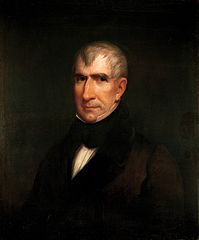
William Henry Harrison

William Henry Harrison (born Berkeley, Virginia, 1773; died Washington, DC, April 4, 1841) was the ninth president (1841) of the United States. After a successful military career, he served in the House of Representatives, the Senate, and as ambassador to Colombia. His presidential campaign slogan was “Tippecanoe and Tyler Too.” His inaugural address was delivered in the cold and rain. He developed pneumonia and died a month later. Children could visit a website at: William Henry Harrison. They could find out what happened at Tippecanoe.

Amy Lowell (born Brookline, Massachusetts, 1874; died Brookline, Massachusetts, May 12, 1925) was a poet. Children can learn more about her life at: Amy Lowell. Children can read some of her works at: Project Gutenberg.

Lydia Estes Pinkham (born Lynn, Massachusetts, 1819; died Lynn, Massachusetts, May 17, 1883) produced and sold Lydia Pinkham’s Vegetable Compound. Containing about 18 percent alcohol, the medicine was supposed to be therapeutic. After her death, the business became quite sound financially.

Alice Walker (born Eatonton, Georgia, 1944) is an author and social activist. One of her books is The Color Purple, which received the 1983 Pulitzer Prize for Fiction. She is the first African American woman to receive a Pulitzer. Children can visit her website at: Alice Walker.

Feb 102025
 
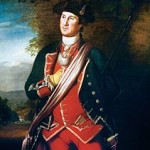
George Washington in British Uniform

George Washington in British Uniform

French and Indian War officially ended in 1763. The French and the British signed the Treaty of Paris. The war meant that the British greatly expanded their territory in North America. However, the war was a tremendous financial burden to Great Britain. That financial burden was passed on to the American colonists in the form of various taxes. The French and Indian War eventually led to the Revolutionary War. Did you know George Washington was an officer on the British side? Children could read Struggle for a Continent: The French and Indian Wars 1689-1763 by Betsy Maestro and Giulio Maestro.