Astronauts David R. Scott and James B. Irwin drove the Lunar Roving Vehicle (LRV) for six hours on the moon in 1971. The two men, plus Command Module Pilot Alfred M. Worden, lifted off aboard Apollo 15 on July 26, 1971. They spent close to three days on the moon and made two more trips aboard the LRV. The LRV could travel at rates between six and eight miles per hour. The crew successfully returned to earth on August 7, 1971. Children could learn more at: Apollo 15.
Lynne Reid Banks (born London, England, 1929; died Surrey, England, April 4, 2024) wrote close to 50 books for children, young adults, and adults. She wrote The Indian in the Cupboard series and Bad Cat Good Cat. Children can visit her website at: Lynne Reid Banks.
Muriel Feelings (born Philadelphia, Pennsylvania, 1938; died Philadelphia, Pennsylvania, September 30, 2011) wrote books for children. She and her former husband Tom produced two still-popular books. Moja Means One: Swahili Counting Book earned a 1972 Caldecott Honor Award. Jambo Means Hello: Swahili Alphabet Book received a 1975 Caldecott Honor Award as well.
Stephanie Kwolek (born New Kensington, Pennsylvania, 1923; died Wilmington, Delaware, June 18, 2014) was a chemist. She is best known for inventing Kevlar, an extremely strong material. One use for Kevlar is in bullet-proof vests. She received seventeen patents. Children could learn more at: Stephanie Kwolek.
Lynne Rae Perkins (born Cheswick, Pennsylvania, 1956) writes and illustrates books for children. Her book Criss Cross received the 2006 Newbery Medal. She also wrote All Alone in the Universe. Children could visit her website at: Lynn Rae Perkins.
J. K. Rowling (born Joanne Kathleen Rowling in Bristol, England, 1965) is the author of the Harry Potter series. Harry Potter was also born on this day. Children could visit her website at: J. K. Rowling.
Robert Kimmel Smith (born Brooklyn, New York, 1930; died Manhattan, New York, April 20, 2020) wrote books for children. His books include Chocolate Fever and The War with Grandpa.

Flag of Switzerland
Switzerland celebrates Confederation Day of 1291. Three cantons formed an alliance, and other cantons joined as years passed. The 1874 constitution changed the confederation into a country. The area of Switzerland is a bit less than twice the area of New Jersey, and the Alps dominate its geography. Almost eight million people live in Switzerland, and Bern is the capital. Parades, bonfires, and fireworks mark the day. Children could enjoy some Swiss cheese or some Swiss chocolate.

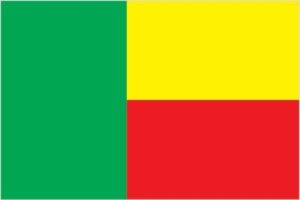
Flag of Benin
Benin celebrates National Day. The country announced its independence from France in 1960. Located on the western coast of Africa, Benin is about the size of the state of Pennsylvania. The geography is mostly flat with few low mountains. Many people survive on subsistence farming, and cotton is one the the country’s major exports. Almost ten million people live in Benin, and Porto-Novo is the capital.

Colorado Flag
Colorado became the thirty-eighth state of the United States in 1876. Its nickname is the Centennial State, because it became a part of the country one hundred years after the revolution. Its name comes from a Spanish phrase meaning the color red. Early Spanish explorers in the area were impressed with the many red-colored canyons and thus called the area Colorado. People were living in the Mesa Verde cliff dwellings, in the state’s southwestern corner, around 1200. When gold was discovered in 1858, the local phrase became “Pike’s Peak or Bust.” It is the eighth largest state and the 21st most populous state. Denver is the state capital, and tourism is one of the most important economic factors.
Joseph Priestley discovered oxygen in 1774. His experiments proved that air is a combination of gases and that oxygen is necessary for fire.

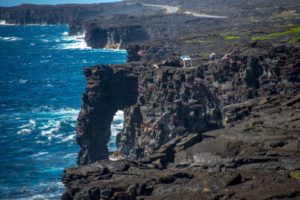
Holei Sea Arch
Courtesy of NPS
Hawaii Volcanoes National Park was established in 1916. The area, encompassing 344,812 acres, includes the active volcanoes Kilauea and Mauna Loa. Areas of the park have had to close temporarily when the volcanoes are very active. The park, protecting unusual plants and animals, became a UNESCO World Heritage Site in 1987. Children can visit the park’s website at: http://www.nps.gov/havo.

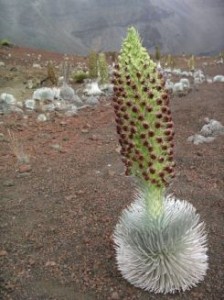
Haleakala Silversword in Full Bloom
Haleakala National Park was created in 1961. Carved from the Hawaii Volcanoes National Park on Maui, this park encompasses the vast, extinct volcano crater Haleakala and the Kipahula wilderness area. The word Haleakala means the house of the sun in Hawaiian. The park, around 33,265 acres, hosts over a million visitors a year. Children can visit the park’s website at: http://www.nps.gov/hale.

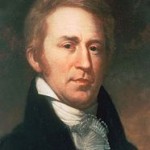
William Clark
William Clark (born Caroline County, Virginia, 1770; died St. Louis, Missouri, September 1, 1838) was an explorer. He and Meriwether Lewis headed the Corps of Discovery into the Louisiana Purchase from 1804 to 1806. Later he fought in the War of 1812 and then became governor of the Missouri Territory. Children would learn a great deal from Lewis and Clark for Kids: Their Journey of Discovery with 21 Activities by Janis Herbert.
Gail Gibbons (born Oak Park, Illinois, 1944) is a children’s author and illustrator. She has written over 170 books, including Tell Me, Tree. Children can visit her website at: Gail Gibbons.
Francis Scott Key (born Frederick County, Maryland, 1779; died Baltimore, Maryland, January 11, 1843) was a lawyer and a poet. He wrote The Star-Spangled Banner in 1814 after watching the British bombard Fort McHenry during the War of 1812. Children can find out more at: Francis Scott Key.
Herman Melville (born New York, New York, 1819; died New York, New York, September 28, 1891) was a novelist. One of his best known works is Moby Dick. Children can read many of his works, including Moby Dick, at: Project Gutenberg.
Maria Mitchell (born Nantucket, Massachusetts, 1818; died Lynn, Massachusetts, June 28, 1889) was the first woman professional astronomer. She discovered a comet in 1847, and she became a professor of astronomy at Vassar. Older children can learn more at: Maria Mitchell. They could also read books by her and about her at: Project Gutenberg.
Bill Wallace (born Chickasha, Oklahoma, 1947; died Chickasha, Oklahoma, January 30, 2012) wrote 31 books for children. His works include A Dog Named Kitty and The Legend of Thunderfoot.
Henry Hudson discovered Hudson Bay in 1610. Aboard the Discovery, he felt the bay might really be the Northwest Passage to the Pacific Ocean. In November his ship became icebound in the bay, and the men wintered on shore. The next year his crew mutinied, and he, his son, and some crew members were set adrift in a small boat.