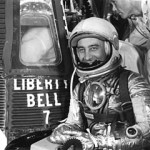
Gus Grissom
Virgil “Gus” Grissom became the second American to travel into space in 1961. Aboard Liberty Bell 7, he reached an altitude of 118 miles and flew about 300 miles away from Cape Canaveral. Children could read about his life at: Grissom.
Gus Grissom
Virgil “Gus” Grissom became the second American to travel into space in 1961. Aboard Liberty Bell 7, he reached an altitude of 118 miles and flew about 300 miles away from Cape Canaveral. Children could read about his life at: Grissom.
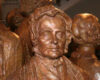
Statue of Lucretia Mott
National Women’s Hall of Fame opened in Seneca Falls, New York, in 1979. The site of the Women’s Rights Convention in 1848, the hall honors many women. Children could find out who has been inducted. They could list future possible inductees by visiting: http://www.greatwomen.org.

Frances Folsom Cleveland
Frances Folsom Cleveland (born Buffalo, New York, 1864; died Baltimore, Maryland, October 29, 1947) was America’s First Lady from June 2, 1886 to March 4, 1889 and from March 4, 1893 to March 4, 1897. She was the wife of Grover Cleveland, the 22nd and 24th president of the United States. She married him during his first term in office and became First Lady at age 21. Their daughter was named Ruth; the candy bar Baby Ruth was named after her. Grover Cleveland died in 1908. The former First Lady married Thomas J. Preston, Jr., in 1913. Children can visit a website at: Frances Cleveland. Idea: Children could eat small Baby Ruth candy bars and learn more about Frances Cleveland’s life.
Ernest Hemingway (born Oak Park, Illinois, 1899; died Ketchum, Idaho, July 2, 1961) was a writer. Two of his most famous works are The Old Man and the Sea and A Farewell to Arms. He won the Nobel Prize for Literature in 1954. Children could learn more at: Ernest Hemingway.
Isaac Stern (born Kreminiecz, USSR, 1920; died New York, New York, September 22, 2001) was a violinist.
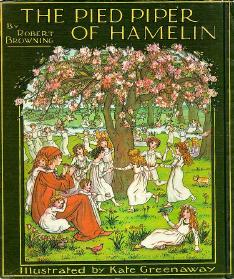
Pied Piper of Hamelin
Pied Piper of Hamelin, according to legend, piped the rats out of the town and into the river in 1376. When the townspeople refused to pay him, he piped the children out of town as well. The children were never seen again. Many versions of the legend exist, but children could read one of the best, written by Robert Browning and illustrated by Kate Greenaway, at: Pied Piper.
John White and 150 colonists arrived in Roanoke Colony in 1587. They were to join some men who had previously settled there. However, Roanoke was deserted. The group stayed, but John White returned to Great Britain later in the year for more people and supplies. War with Spain kept him in England, and White did not reach Roanoke until August 18, 1590. No colonists were there, and the area became known as the “Lost Colony.” Children could learn more at: Roanoke Colony.

USS Constitution
Courtesy of Hunter Stires
USS Constitution began its maiden voyage in 1798. Nicknamed Old Ironsides, the three-masted, wooden ship was named by President George Washington. She was most active in the War of 1812, and in 1907 she became a museum. Today she is the world’s oldest active vessel. Berthed in the Charlestown Naval Yard in Boston, Massachusetts, she sports a crew of 60 and provides historical perspectives and tours for visitors. Children can learn more at: USS Constitution.
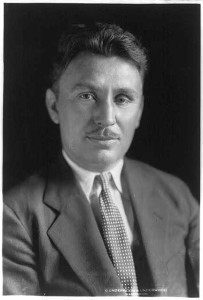
Wiley Post
Wiley Post in 1933 became the first person to fly solo around the world. He traveled 15,596 miles, and his voyage in the Winnie Mae lasted 7 days, 18 hours, 49 minutes. About 50,000 people welcomed his return to the Floyd Bennett Field in New York. He received a ticker tape parade in New York City. Children could learn more at: Solo Flight.
Stephen Vincent Benet (born Bethlehem, Pennsylvania, 1898; died New York, New York, March 13, 1943) was a writer. He received a Pulitzer for John Brown’s Body, a long poem published in 1928. He won another Pulitzer for Western Star, printed in 1943. He also wrote short stories and novels. Children could learn more at: Stephen Vincent Benet.
Margery Williams Bianco (born London, England, 1881; died New York, New York, September 4, 1944) wrote at least 24 books for children. Her book Winterbound received a 1937 Newbery Honor Award. Using the pen name Mary Williams, she wrote The Velveteen Rabbit. Children can read The Velveteen Rabbit at Project Gutenberg.
Alexander Calder (born Philadelphia, Pennsylvania, 1898; died New York, New York, November 11, 1976) was an artist known for making enchanting mobiles. Children can visit a fascinating website at: Alexander Calder.
Patricia Calvert (born Great Falls, Montana, 1931) writes books for young adults. Her books include Sooner and The Stone Pony.
Daniel Carroll (born Upper Marlboro, Maryland, 1730; died Rock Creek, Maryland, May 7, 1796) represented Maryland at the Constitutional Convention. Having suffered religious persecution, he helped draft the first amendment and the tenth amendment. Children could learn more at: Daniel Carroll.
S. E. Hinton (born Tulsa, Oklahoma, 1948) writes books for children and young adults. One of her books is The Outsiders. She received the 1988 Margaret A. Edwards Award for her first five young adult books. Young adults can visit her website at: S. E. Hinton.
Emma Lazarus (born New York, New York, 1849; died New York, New York, November 19, 1887) wrote poetry. Part of her “The New Colossus” was inscribed on the base of the Statue of Liberty. Children can read some of her work at: Project Gutenberg.
Gregor Mendel (born Heinzendorf, Austria, 1822; died Brunn, Austria, January 6, 1884) was a monk who pioneered work in genetics. In 1856 he started experiments with pea plants in the monastery vegetable garden. He continued breeding and crossbreeding the plants for a number of years. He kept notes. His work was not seen until after his death. Older children can read about his experiments at: Mendel.
Reverend William Archibald Spooner (born London, England, 1844; died Oxford, England, August 29, 1930) frequently confused parts of words. These led to spoonerisms. For example, he might say “pony pest card,” instead of “penny post card.” Idea: Children could make up their own spoonerisms. Children could visit a website at: Spooner.
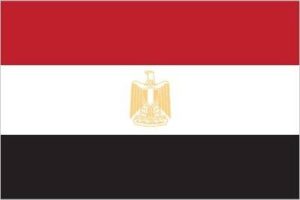
Flag of Egypt
Egypt celebrates Revolution Day. The area of Egypt is about the size of Idaho, Montana, Wyoming, and Nevada combined. A desert country bordering the Mediterranean Sea, Egypt is home to the pyramids of Giza. The Nile flows from south to north through the country. Over 85 million people live in Egypt, and most of them live along the Nile or the Mediterranean Coast. Cairo is the capital.
Comet Hale-Bopp was discovered in 1995. Amateur astronomers Alan Hale in New Mexico and Thomas Bopp in Arizona, independent of each other, reported the extremely bright comet’s existence. It became visible in May 1996 and remained so until December 1997. Powerful telescopes were able to detect it in December 2010 and in August 2012. It may reappear around the year 4385. Children can learn more at: Comet Hale-Bopp.