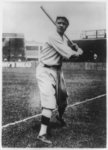
Babe Ruth
Babe Ruth hit his sixtieth home run for the season in 1927. That record stood until Roger Maris hit his sixty-first home run of the season on October 1, 1961.
Babe Ruth
Babe Ruth hit his sixtieth home run for the season in 1927. That record stood until Roger Maris hit his sixty-first home run of the season on October 1, 1961.

Hoover Dam
Hoover Dam (originally Boulder Dam) was dedicated in 1936. The dam, located at the border of Nevada and Arizona, captures water from the Colorado River. Constructed between 1931 and 1936, it was a marvel at the time and remains an amazing structure. The dam created Lake Mead, the largest reservoir in the United States. The dam controls flood waters and provides hydroelectric power to Nevada, Arizona, and California. It is also quite a tourist attraction. Children can learn some SUPER facts at: Hoover Dam.
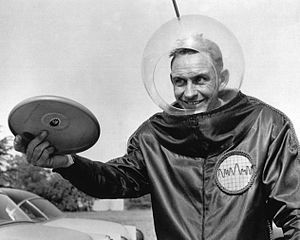
Walter “Fred” Morrison and his Pluto Platter
Frisbee was patented in 1958 by Walter “Fred” Morrison. He received patent number 183,626 for his “Flying Toy.” For a time he called the toy the Pluto Platter. Older children could experiment with the physics of a Frisbee at: Frisbee. They could create a Frisbee course in the backyard or on the playground.
James Meredith enrolled as the first African-American at the then all-white University of Mississippi in 1962. President Kennedy sent federal troops to quell the riots. Three people died, and 50 more were hurt. Older children could learn more at: James Meredith.
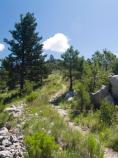
Bowl Trail
Guadalupe Mountains National Park was established in 1972. Located in the Guadalupe Mountains in west Texas, the park encompasses over 86,000 acres. Interesting fact – the park contains a marine fossil reef that is 265 million years old! Children could visit the park’s website at: http://www.nps.gov/gumo.
Edith Kunhardt Davis (born Morristown, New Jersey, 1937; died New York, New York, January 2, 2020) was an author and illustrator of children’s books. Her mother, Dorothy Kunhardt, wrote Pat the Bunney for Edith. Edith wrote 70 books and illustrated at least twelve books. Her works range from Tickle the Pig to Pompeii…Buried Alive!.
Carol Fenner (born North Hornell, New York, 1929; died Battle Creek, Michigan, February 16, 2002) wrote books for children and young adults. She received a 1979 Coretta Scott King Honor Award for Skates of Uncle Richard and a 1996 Newbery Honor Award for Yolanda’s Genius.
Hans Wilhelm Geiger (born Neustadt, Germany, 1882; died Berlin, Germany, September 24, 1945) invented the Geiger counter. Older children could find out how a Geiger counter works at: Geiger Counter.
Edgar Parin D’Aulaire (born Munich, Germany, 1898; died May 1, 1986) wrote at least 27 books for children. He worked with his wife Ingri D’Aulaire on many books. One of their most famous books was D’Aulaire’s Book of Greek Myths. They received the 1940 Caldecott Medal for Abraham Lincoln. Children can learn more at: Edgar Parin D’Aulaire.
Alvin Tresselt (born Passaic, New Jersey, 1916; died Burlington, Vermont, July 24, 2000) wrote at least 30 books for children. His works include The Mitten and White Snow Bright Snow. That book earned its illustrator Roger Duvoisin the 1958 Caldecott Medal. Children can learn more at: Alvin Tresselt.
Elie Wiesel (born Sighet, Romania, 1928; died New York, New York, July 2, 2016) was an author and a survivor of the Holocaust. He was awarded the 1986 Nobel Peace Prize for helping Holocaust victims. One of his most famous books is Night. Children could learn more at: Elie Wiesel.
Janet S. Wong (born Los Angeles, California, 1962) has published at least ten picture books, at least four novels, and at least ten poetry collections for children. Her works include You Have to Write and This Next New Year. Children can visit her website at: Janet S. Wong.
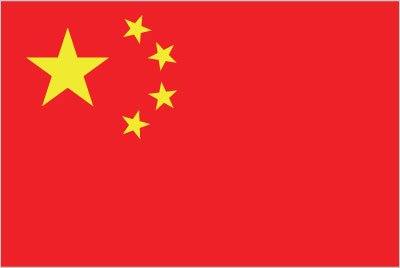
Flag of China
National Day of the People’s Republic of China is celebrated today. The present government came into being in 1949. Slightly smaller than the United States, China has a variety of habitats, from Mount Everest to deserts to tropics. About 1.349 billion people live in China, and the capital is Beijing. Children can learn more at: China.
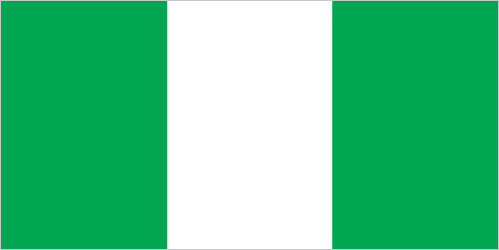
Flag of Nigeria
Nigeria celebrates Independence Day. In 1960 it became independent from the United Kingdom, and in 1963 it became a republic. The country, home to 175 million Nigerians, is a bit larger than twice the size of California, and Niamey is the capital. Children can learn more at: Nigeria.
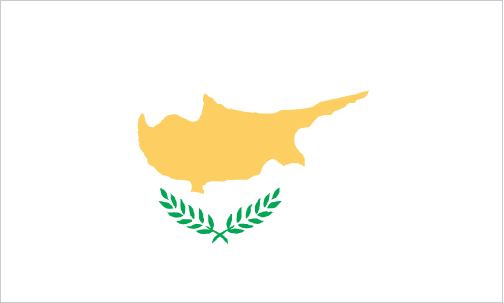
Flag of Cyprus
Cyprus celebrates Independence Day. The country became free of British rule in 1960. An island in the Mediterranean Sea, Cyprus is a little bigger than half the size of Connecticut. About 1.2 million people live in Cyprus, and Nicosia is the capital.
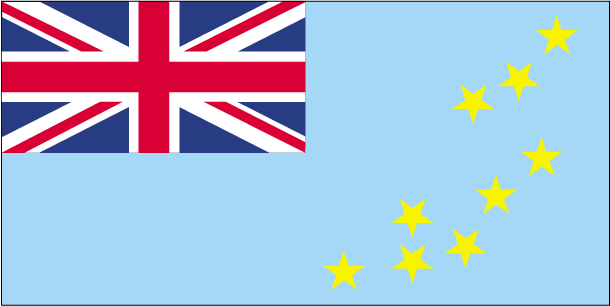 Tuvalu celebrates Independence Day. In 1978 it became an independent country, but it is still part of the British Commonwealth. The fourth smallest country in the world, Tuvalu has an area about the size of 0.1 the area of Washington, DC. Located about halfway between Hawaii and New Zealand, the country’s three islands and six atolls support about 11,000 people. Funafuti is the capital.