Jim Benton (born Michigan, 1960) has written and illustrated at least 33 books for children. His works include the Franny K. Stein series and the It’s Happy Bunny series. Children can visit his website at: Jim Benton.
Michael Collins (born Rome, Italy, 1930; died Naples, Florida, April 28, 2021) was the third person on Apollo 11. He orbited the moon while Neil Armstrong and Buzz Aldren landed on the moon. Collins was also a test pilot and the pilot of Gemini 10. Children can learn more at: Michael Collins.
John Keats (born London, England, 1795; died Rome, Italy, February 23, 1821) was a great English poet. Children could read some of his works at: Project Gutenberg.
Juliette Magill Kinzie Gordon Low (born Savannah, Georgia, 1860; died Savannah, Georgia, January 17, 1927) created the American Girl Scouts. When she was traveling in Europe, she became friends with Robert Baden-Powell, the founder of the Boy Scouts. When she returned to the United States in 1912, she organized the first group of Girl Guides. In 1915 the organization’s name was changed to the Girl Scouts. Idea: Perhaps a Girl Scout could speak to the group. Children could learn more at: Girl Scouts.
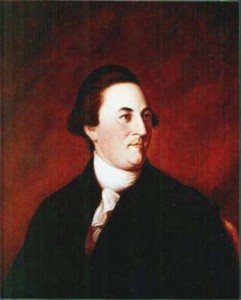
William Paca
William Paca (born Abingdon, Maryland, 1740; died Talbot County, Maryland, October 23, 1799) signed the Declaration of Independence. He represented Maryland. He spent quite a bit of his own money to provide supplies to the Revolutionary War soldiers. After the Revolutionary War, he became a United States district justice. He also made several suggestions regarding the Bill of Rights. Older children could learn more at: Paca.
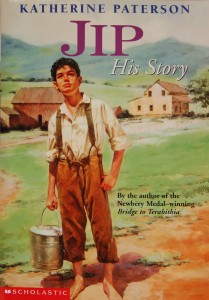
Jip, His Story
Katherine Paterson (born Qing Jiang, Jiansi, China, 1932) has written more than 40 books for children. She earned the 1978 Newbery Medal for Bridge to Terabithia, a 1979 Newbery Honor Award for The Great Gilly Hopkins, and the 1981 Newbery Medal for Jacob Have I Loved. She received the 1997 Scott O’Dell Award for Jip, His Story, the Hans Christian Andersen Medal in 1998, the Astrid Lindgren Memorial Award for Lifetime Achievement in 2006, and the Laura Ingalls Wilder Medal in 2013. Children can visit her website at: http://www.terabithia.com/about.html.
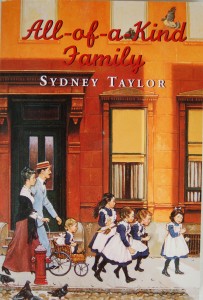
All-of-a-Kind Family
Sydney Taylor (born New York, New York, 1904; died New York, New York, February 12, 1978) wrote books for children. Her books include the fascinating All-of-a-Kind Family series and Danny Loves a Holiday. After her death, her husband created the Sydney Taylor Book Award in her honor. The award honors the best Jewish writers and illustrators every year. Children can read more about Sydney Taylor and the Sydney Taylor Book Award from Children’s Book Award Handbook by Diana F. Marks.
Jan Vermeer (born Delft, Netherlands, 1632; died Delft, Netherlands, December 15, 1675) was a Dutch painter. Experts believe he painted only 35 or 36 works. Children can view several of his works at: Vermeer.