Chicago Cubs traded Max Flack for the Cardinals player Cliff Heathcote between games in a doubleheader in 1922. Both Flack and Heathcote played for both teams the same day!
May 302026
Chicago Cubs traded Max Flack for the Cardinals player Cliff Heathcote between games in a doubleheader in 1922. Both Flack and Heathcote played for both teams the same day!
Mel Blanc (born San Francisco, California, 1908; died Los Angeles, California, July 10, 1989) was the voice of many of the characters on Looney Tunes, including Bugs Bunny and Daffy Duck. Children could read Melvin the Mouth, written by Katherine Blanc and illustrated by Jeffrey Ebbeler. Katherine Blanc is the daughter-in-law of Mel Blanc.
Peter I (born Moscow, Russia, 1672; died St. Petersburg, Russia, January 28, 1725) was Tsar and Emperor of Russia. He wanted to make Russia more of a world power. He introduced Arabic numerals, and he simplified the Russian alphabet. He overhauled government and the military.
Copyright Law was established in 1790. Children could learn more at: http://www.copyrightkids.org/.

1868 Boneshaker
First bicycle race was held in Paris, France, in 1868. The 1.2 km race was at the Parc De Saint-Cloud. James Moore, an Englishman, won the race on a wooden bike with iron tires inlaid with ball bearings.
Corn Flakes Advertisement
Flaked cereals were patented by Dr. John Harvey Kellogg in 1884. He developed the cereals as a healthy alternative to breakfasts of bacon and eggs. He was granted Patent Number 558,393. His brother, W. K. Kellogg, made the breakfast cereal popular and affordable and founded Kellogg’s. Children can examine the history of breakfast cereal at: Corn Flakes. Children could poll friends to find out which cereals are most popular.
 Amendment Seventeen to the Constitution was adopted in 1913. It provided for the direct election of senators. Prior to the amendment, senators were elected by state legislatures. Children can view a list of current senators, plus much more information, at: US Senators.
Elizabeth Coatsworth (born Buffalo, New York, 1893; died Nobleboro, Maine, August 31, 1986) wrote over 90 books for children. Her books include the Sally series and The Cat Who Went to Heaven, which received the 1931 Newbery Medal. The Cat Who Went to Heaven was illustrated by Lynd Kendall Ward.
Phillip Hoose (born South Bend, Indiana, 1947) has written at least ten books for children. His book Claudette Colvin: Twice Towards Justice earned a 2010 Newbery Honor Award and a Robert F. Sibert Honor Award. Children can visit his website at: Phillip Hoose.
Harry Mazer (born New York, New York, 1925; died Montpelier, Vermont, April 7, 2016) wrote at least 22 books for children and young adults. His books include Solid Gold and The Island Keeper. He was married to Norma Fox Mazer, who also wrote books for children and young adults. They co-authored at least two books, Heartbeat and Bright Days, Stupid Nights.
Walt Whitman (born West Hills, Long Island, New York, 1819; died Camden, New Jersey, March 26, 1892) was a poet and reporter. One of his most famous works is Leaves of Grass. Children can read some of his works at: Project Gutenberg.
Jay Williams (born Buffalo, New York, 1914; died London, England, July 12, 1978) wrote at least 79 books for both adults and children. He is most known for his Danny Dunn series, numbering fifteen books.
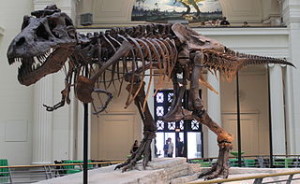
Sue, the skeleton of a T Rex
Dinosaur Day is today! Also celebrated on the third Tuesday in May, the day can be filled with all things dinosaurs: facts about dinosaurs, songs about dinosaurs, posters about dinosaurs. Children could make models of dinosaur eggs or footprints. Foodies could make dinosaur-shaped cookies. Children could learn more at: https://kids.nationalgeographic.com/animals/prehistoric.
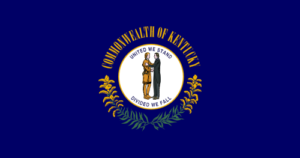
Kentucky Flag
Kentucky became the fifteenth state of the United States in 1792. It probably got its name from either the Iroquois word Kenta-ke, meaning meadowland, or the Wyandot word Kah-ten-tah-teh, meaning land of tomorrow. Its state song is “My Old Kentucky Home.” Kentucky ranks 37th in area and 25th in population compared to all the states. Tourist attractions include Mammoth Cave National Park. Frankfort is the capital, and Louisville is the largest city. Children could visit an internet site at: Kentucky.
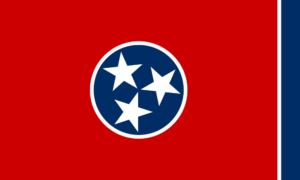
Tennessee Flag
Tennessee became the sixteenth state of the United States in 1796. Its nickname is the Volunteer State. Tennessee’s name comes from tenase, meaning main village of Cherokees. Nashville is both the state capital and the state’s largest city. The state is the 36th largest state and ranks fifteenth in terms of population. The Grand Ole Opry, located in Nashville, attracts many country music fans. The state butterfly is the zebra swallowtail, and the state wild animal is the raccoon. Children could visit an Internet site at: Tennessee.