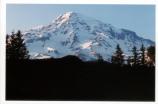
Mount Rainier
Captain George Vancouver located and named Mount Rainier in Washington in 1792. Mount Rainier is a stratovolcano that last erupted a thousand years ago. Children can learn more at: http://www.nps.gov/mora/index.htm.
Mount Rainier
Captain George Vancouver located and named Mount Rainier in Washington in 1792. Mount Rainier is a stratovolcano that last erupted a thousand years ago. Children can learn more at: http://www.nps.gov/mora/index.htm.
John Stith Pemberton sold Coca-Cola for the first time in 1886 in Jacob’s Pharmacy in Atlanta, Georgia. He sold nine glasses at a nickel each. Children could learn more at: https://www.coca-colacompany.com/company/history.

Winston Churchill Waving to the Ecstatic Crowd
V-E Day was celebrated in 1945. Germany surrendered to the Allied Forces, ending World War II in Europe. A surrender document was signed in Reims, France, and became effective one minute past midnight on May 9, 1945. President Harry Truman, whose birthday is today, signed the agreement. He stated that the agreement was a wonderful birthday present. Children could view an excellent multimedia presentation at: V-E Day.
Ellen Howard (born New Bern, South Carolina, 1943) writes books for children. Her books include the Log Cabin series and The Crimson Cap.
Milton Meltzer (born Worcester, Massachusetts, 1915; died New York, New York, September 19, 2009) wrote about 100 books for children. He received the 2001 Laura Ingalls Wilder Award for his lifelong contribution to children’s literature. His books include Piracy and Plunder and Bound for America.

Journey Outside
Mary Q. Steele (born Chattanooga, Tennessee, 1922; died Chapel Hill, North Carolina, July 6, 1992) wrote over twenty books for children and adults. Married to author William O. Steele, she stated that she was born an author. Her book Journey Outside received a 1970 Newbery Honor Award.
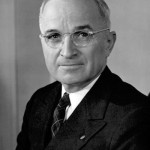
Harry Truman
Harry Truman (born Lamar, Missouri, 1884; died Kansas City, Missouri, December 26, 1972) was the thirty-third president (1945-1953) of the United States. During World War I he served as an artilleryman He was a senator before he was elected vice-president. When Roosevelt died, Truman became president. Some of his actions were to join the United Nations, to accept Germany’s surrender during World War II, and to drop the atomic bombs on Japan. Children could visit a website at: Harry S. Truman. Truman made an interesting statement. He said, “The buck stops here.”
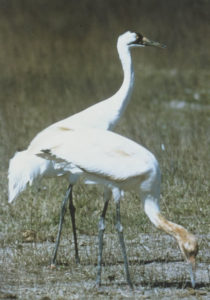
Whooping Cranes Migrate
World Migratory Bird Day is today. Held on the second Saturday in May and on the second Saturday in October (October 10, 2026) the day brings to light the plights of a number of migratory birds. This year’s theme is Creating Bird-Friendly Cities and Communities. Children could learn more at: World Migratory Bird Day. Idea: Children could make a list of migratory birds common to their home territory. For example, robins and wrens migrate.

Flag of Guernsey
Guernsey celebrates Liberation Day, the day in 1945 that the populace was freed from Nazi Germany. The islands, located in the English Channel, are a British Crown Dependency but not part of the United Kingdom. Home to 65,000 people, the islands are about half the size of Washington, DC. Saint Peter Port is the capital, and the economy depends on tourism and banking. Older children can learn more at: Guernsey.

Join or Die
America’s first political cartoon was printed in 1754 in Benjamin Franklin’s The Pennsylvania Gazeteer. The cartoon depicted a snake cut into pieces. Each piece was labeled with the name of a colony. The words “Join or Die” finished the cartoon. The point of the cartoon was that the colonies had to join together against the British. At that time some people believed that a cut-up snake would come to life again if the parts were assembled before sunset. Children could learn about the history of political cartoons from the Library of Congress site at: Political Cartoons.
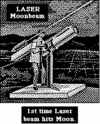 Laser beam was bounced off the moon’s surface successfully in 1962. Scientists from MIT illuminated a bit of the moon’s surface. A lunar laser ranger from Apollo 11 helped refine future laser beams aimed at the moon. Scientists have found that the moon is moving a bit away from the earth and that the moon has a liquid core.
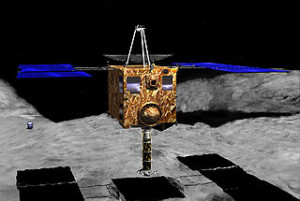
Hayabusa
Hayabusa was launched in 2003. The unmanned Hayabusa (Peregrine Falcon) was launched from a Japanese space center on to collect samples of Near-Earth Asteroid 25143 Itokawa. It landed on the asteroid on November 19, 2005. It collected samples of the asteroid and successfully brought those samples back. The samples reveal that the asteroid is more like a meteorite than an earth rock. Hayabusa returned to earth on June 13, 2010. Children can learn more at: Hayabusa.
Richard George Adams (born United Kingdom, 1920; died United Kingdom, December 24, 2016) was a writer. He is most famous for his fantasy book, Watership Down.
J. M. Barrie (born Kirriemuir, Scotland, 1860; died London, England, June 19, 1937) was an author. One of his works was Peter Pan. Children can read many of his works at: Project Gutenberg. They can also learn more at: J. M. Barrie.
Belle Boyd (born Martinsburg, Virginia, 1843; died Kilbourne, Wisconsin, June 11, 1900) was a Confederate spy. After the Civil War, she was an actress and speaker.
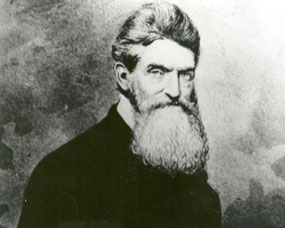
John Brown
John Brown (born Torrington, Connecticut, 1800; hanged Charles Town, West Virginia, December 2, 1859) was an abolitionist. He led a raid on Harpers Ferry in the cause of abolition. He was caught and hanged. Children could learn more about him and his raid at: John Brown.
Howard Carter (born Kensington, London, United Kingdom, 1873; died Kensington, London, United Kingdom, March 2, 1939) was an archaeologist. He discovered King Tut’s tomb. Older children could read In the Valley of the Kings: Howard Carter and the Mystery of King Tutankhamen’s Tomb by Daniel Meyerson.
William Pène du Bois (born Nutley, New Jersey, 1916; died Nice, France, February 5, 1993) wrote and illustrated children’s books. He received the 1948 Newbery Medal for The Twenty-One Balloons. His Bear Party was a 1952 Caldecott Honor Book, and Lion was a 1957 Caldecott Honor Book. Children can learn more at: William Pene du Bois.
Eleanor Estes (born West Haven, Connecticut, 1906; died West Haven, Connecticut, July 15, 1988) wrote and illustrated at least 20 books for children. She earned three Newbery Honor Awards: The Middle Moffat in 1943, Rufus M. in 1944, and The Hundred Dresses in 1945. She received the 1952 Newbery Medal for Ginger Pye. Children can learn more at: Eleanor Estes.