Dec 182026
 

Joseph Grimaldi (London, England, 1778; died London, England, May 31, 1837) was known as Joey the Clown. His antics added much to theater humor. Children could become clowns today and wear clown makeup. They could organize into small groups and create clown skits.

Judith Heumann (born Brooklyn, New York, 1947; died Washington, DC, March 4, 2023) was called the “Mother of the Disability Rights Movement.” She contracted polio when she was eighteen months old and used a wheelchair the rest of her life. She organized the 504 Sit In that ultimately produced the 1990 Americans with Disabilities Act. Children could read Fighting for Yes! The Story of Disability Rights Activist Judith Heumann, written by Maryann Cocca-Leffler and illustrated by Vivien Mildenberger.

Paul Klee (born near Bern, Switzerland, 1879; died Muralto, Switzerland, June 29, 1940) was an artist. His paintings exude a dreamlike, fantasy quality. Children could visit a website at: Paul  Klee.

Marilyn Sachs (born Bronx, New York, 1927; died San Francisco, California, December 28, 2016) wrote 35 children’s books. Her books include Lost in America and A Pocket Full of Seeds.

Steven Spielberg (born Cincinnati, Ohio, 1946) is a film producer and director. Among his credits are Jurassic Park and Close Encounters of the Third Kind. Idea: Spielberg’s movies are very popular. Children could visit: Spielberg. Scholars could investigate the revenues from the movies and make a bar graph to indicate the results.

Dec 192026
 

Eve Bunting (born Maghera, Northern Ireland, 1928; died Santa Cruz, California, October 1, 2023) was a children’s author. She wrote more than 250 books, including Fly Away Home. She received the 1976 Golden Kite Award for One More Flight. She also received the 1993 Edgar Award for Coffin on a Case. Children can see a video interview of Eve at: Eve Bunting.

Sir William Edward Parry (born Bath, England, 1790; died Ems, Germany, July 8, 1855) was an explorer. He led expeditions to the Arctic in search of the Northwest Passage. Children could explore the concept of the Northwest Passage. Why was it so important to the United Kingdom?

Eleanor H. Porter (born Littleton, New Hampshire, 1868; died Cambridge, Massachusetts, May 21, 1920) was a children’s author. She wrote both short stories and novels. Her most well-known work is Pollyanna, published in 1913. Children can read many of her works, including Pollyanna, at: Project Gutenberg. They can learn more at: Eleanor H. Porter.

Dec 202026
 

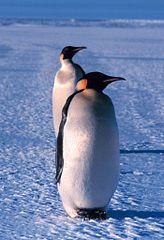
Richard Atwater (born Chicago, Illinois, 1892; died Chicago, Illinois, August 21, 1948) was a children’s author. He and his wife, Florence Atwater, are famous for writing Mr. Popper’s Penguins. The book won a 1939 Newbery Honor Award.

Sandra Cisneros (born Chicago, Illinois, 1954) is an author. She has written at least eight books, and she has contributed to several anthologies. She is best known for The House on Mango Street, published in 1984.

Lulu Delacre (born Rio Piedras, Puerto Rico, 1957) writes and illustrates bilingual books for children. She published Arroz Con Leche: Popular Songs and Rhymes from Latin America in 1989. She has won three Pura Belpré Illustrator Honor Awards: The Bossy Gallito (1996), Arrorró, Mi Niño : Latino Lullabies and Gentle Games (2006), and The Storyteller’s Candle: La velita de los cuentos (2010). The Storyteller’s Candle is about Pura Belpré. Children can visit Delacre’s website and find some “fun freebies” at: Lulu Delacre.

File:Harvey Samuel Firestone.jpg

Harvey Samuel Firestone

Harvey Samuel Firestone (born Columbiana, Ohio, 1868; died Miami Beach, Florida, February 7, 1938) created Firestone Tire & Rubber Company. At first he produced solid rubber tires. Then he experimented and developed air-filled tires. He, Thomas Edison, and Henry Ford sponsored joint projects regarding synthetic rubber.

Dennis Brindell Fradin (born Chicago, Illinois, 1945; died Evanston, Illinois, August 29, 2012) wrote over 300 nonfiction children’s books. One excellent, excellent book is The Signers: The 56 Stories Behind the Declaration of Independence.

Dec 212026
 

Benjamin Disraeli (born London, England, 1804; died London, England, April 19, 1881) was an English politician and writer. He was elected to the House of Commons in 1837. He was the country’s prime minister in 1868 and from 1874 to 1880.

Susan Pearson (born Boston, Massachusetts, 1946) has written at least 35 children’s books. A favorite is How to Teach a Slug to Read. Other books include The Drowsy Hour: Poems for Bedtime and Squeal and Squawk: Barnyard Talk.

Roger Williams (born London, England, circa 1603; died Providence, Rhode Island, April 18, 1683) was a colonial theologian who believed in freedom of religion. He was banished from the Massachusetts Colony in 1636. He and his followers bought land from the Native Americans and founded the colony of Providence. Children could learn more at: Roger Williams.

Dec 222026
 

William Ellery (born Newport, Rhode Island, 1727; died Newport, Rhode Island, February 15, 1820) signed the Declaration of Independence, representing Rhode Island. He wanted to be a lawyer, but he had 16 children to support. Therefore, for many years he was a merchant. Finally he became wealthy enough to study law and then become a lawyer. During the Revolutionary War, the British destroyed Ellery’s home and most of Newport. After the war, he served in Congress and tried to abolish slavery. Children could learn more at: William Ellery.

Thumbnail for version as of 18:41, 12 April 2007

Lady Bird Johnson

Claudia Alta Taylor (Lady Bird) Johnson (born Karnack, Texas, 1912; died Austin, Texas, July 11, 2007) was America’s First Lady from November 22, 1963 to January 20, 1969. She was the wife of Lyndon Baines Johnson, thirty-sixth president of the United States. She helped establish the Head Start program for preschool children, and she advocated for the environment. Children can visit a website at: Lady Bird Johnson. Mrs. Johnson wanted to eliminate many of the billboards along the highways. She felt the billboards detracted from nature’s beauty. Children could decide whether the billboards are unsightly or whether they help consumers make decisions. The First Lady organized vast expanses of wildflowers. Children could read Miss Lady Bird’s Wildflowers: How a First Lady Changed America, written by Kathi Appelt and illustrated by Joy Fisher Hein.

James Edward Oglethorpe (born London, England, 1696; died Cranham Hall, Essex, England, June 30, 1785) was one of the leading organizers of the Georgia colony. In England at that time debtors were imprisoned. His goal was to bring the debtors to Georgia and give them a fresh start. Colonists were able to obtain farms of 50 acres. He encouraged the farmers to seek indentured servants from England, thus giving more poor people a chance of a decent life. Because Georgia was situated between British South Carolina and Spanish Florida, the colony became quite important.

Jerry Pinkney (born Philadelphia, Pennsylvania, 1939; died Sleepy Hollow, New York, October 20, 2021) wrote and/or illustrated at least 200 books for children. He won an amazing amount of awards, including five Caldecott Honor Awards, five Coretta Scott King Awards, a Sydney Taylor Honor Award, and hosts of other medals and distinctions. He received the Caldecott Medal in 2010 for The Lion and the Mouse. Children could visit a website dedicated to him at: Jerry Pinkney and then have a Jerry Pinkney morning and read several of his works.

Giacomo Puccini (born Lucca, Italy, 1858; died Brussels, Belgium, November 29, 1924) was an opera composer. Two of his most famous operas are Tosca, created in 1900, and Madame Butterfly, completed in 1904.

William O. Steele (born Franklin, Tennessee, 1917; died Signal Mountain, Tennessee, June 25,1979) wrote 39 children’s books. His The Perilous Road received both the Jane Addams Award and a Newbery Honor Award in 1959.

Dec 232026
 

Avi (born Edward Irving Wortis in New York, New York, 1937) has written at least 80 books for children and teenagers. An extremely versatile writer, he can engage younger children as well as young adults, and his works include historical fiction, fantasy, and mysteries. He received a 1991 Newbery Honor Award for The True Confessions of Charlotte Doyle and a 1992 Newbery Honor Award for Nothing but the Truth. His Crispin: The Cross of Lead received the 2003 Newbery Medal. Children can visit his excellent website at: Avi.

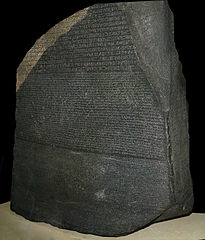
Rosetta Stone

Jean-Francois Champollion (born Figeac, France, 1790; died Paris, France, March 4, 1832) solved the mystery of Egyptian hieroglyphics. He and Thomas Young were both trying to be the first person to use the Rosetta Stone to decode hieroglyphics. Champollion won. Children can read Seeker of Knowledge: The Man Who Deciphered Egyptian Hieroglyphics, by James Rumford. They can also visit: Rosetta Stone to learn more about Champollion and the Rosetta Stone.

Keiko Kasza (born on a small island in the Sea of Japan, 1951) is a writer and illustrator. One of her books is A Mother for Choco. Other works include My Lucky Birthday and Finders Keepers. Children can visit her website at: Keiko Kasza.

Sarah Breedlove Walker (born Delta, Louisiana, 1867; died Irvington, New York, May 25, 1919) was one of the first female African American millionaires. Also known as Madame C. J. Walker, she was a philanthropist and an activist. Children could read Vision of Beauty: The Story of Sarah Breedlove Walker, written by Kathryn Lasky and illustrated by Nneka Bennett. They could also learn more at: Sarah Breedlove Walker.

Dec 242026
 

Christopher “Kit” Carson (born Madison County, Kentucky, 1809; died Fort Lyon, Colorado, May 23, 1868) was a frontiersman and Indian agent. Children can learn more about him at: Kit Carson. They can also visit the Kit Carson Museum at: Kit Carson Museum.

File:Raggedy Ann & Andy - Project Gutenberg eText 17371.jpg

Raggedy Ann and Raggedy Andy Meet for the First Time

Johnny Gruelle (born Arcola, Illinois,1880; died Miami Beach, Florida, January 8, 1938) was a children’s author and illustrator. He created the Raggedy Ann doll and the Raggedy Ann stories. He patented the doll in 1915; children can see the: Patent. Children can learn more at: Johnny Gruelle.

James Prescott Joule (born Salford, Lancashire, England, 1818; died Cheshire, England, October 11, 1889) was a scientist. He formulated Joule’s Law in 1840. An electrical conductor produces heat. The unit of energy is called a joule. Children can set up an experiment with a toaster to show how an electrical conductor carries heat. The children could enjoy the toast after the experiment. Children can learn more at: James Prescott Joule.

William Paterson (born Northern Ireland, 1745; died Albany, New York, September 9, 1806) represented New Jersey at the Constitutional Convention. A lawyer, he was part of New Jersey’s law making system during the Revolutionary War. After the war, he served in the Senate. Then he became governor of New Jersey. Then George Washington asked him to serve on the Supreme Court, a role he held for thirteen years until his death. Children could learn more at: William Paterson.

Benjamin Rush (born Byberry, Pennsylvania, 1745; died Philadelphia, Pennsylvania, April 19, 1813) was an early American hero. He signed the Declaration of Independence. A physician, he was also called the “Father of Psychiatry.” He was the first doctor to label alcoholism as a disease. Children could learn more at: Benjamin Rush.

John Langstaff (born Brooklyn, New York, 1920; died Basel, Switzerland, December 13, 2005) was a musician, music educator, and writer of children’s books. He wrote 25 children’s books, including Frog Went A-Courtin’. The book’s illustrator, Feodor Rojankovsky, received the 1956 Caldecott Medal.

Stephenie Meyer (born Hartford, Connecticut, 1973) writes books for young adults and produces movies. She wrote the Twilight series, The Host, and The Chemist. Older children can visit her website at: Stephenie Meyer.

Feodor Rojankovsky (born Mitava, Russia, 1891; died Bronxville, New York, October 12, 1970) wrote and illustrated books for children. He illustrated more than 100 books. His illustrations in John Langstaff’s Frog Went A-Courtin’ earned him the 1956 Caldecott Medal. Children can learn more at: Feodor Rojankovsky.

Noel Streatfeild (born Sussex, United Kingdom, 1895; died London, United Kingdom, September 11, 1986) wrote at least 28 books for children and at least 28 novels for adults. she also wrote some non-fiction. She is most famous for her “Shoes” books, including Ballet Shoes and Party Shoes. Children can learn more at: Noel Streatfeild.
Dec 252026
 
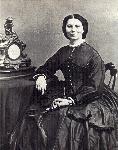
Clara Barton 1865

Clara Barton 1865

Clara Barton (born Oxford, Massachusetts, 1821; died Glen Echo, Maryland, April 12, 1912) was the founder of the American Red Cross. During the Civil War, she began helping the wounded. She also started a system to find missing soldiers. After the war, she traveled to Europe. She observed the International Red Cross in action. She returned to the United States and in 1881 founded what was later known as the American Red Cross. She worked as its president until 1904. Children can visit the AMAZING National Park Service site of her home, featuring virtual tours and handouts, at: Clara Barton.

Cab Calloway (born Rochester, New York, 1907; died Hosckessin, Delaware, November 18, 1994) was a jazz singer and bandleader. One of his most famous songs is “Minnie the Moocher.” Children can view him performing “Hi-De-Ho” on Sesame Street at: Cab Calloway.

Eth Clifford (born New York, New York, 1915; died Pikesville, Maryland, April 1, 2003) wrote over 80 books for children. Her books include Help! I’m a Prisoner in the Library and the Flatfoot Fox mystery series. Children could learn more at: Eth Clifford.

Isaac Newton (born Woolsthorpe, Lincolnshire, England, 1642; died London, England, March 20, 1727) was a mathematician, scientist and writer. He is remembered for three major contributions. He developed calculus, a branch of mathematics. He discovered relationships of light and color. He delineated theories of motion and gravity. All three of the accomplishments were made in an eighteen-month period. Children could eat Fig Newtons and carry out experiments with prisms. They could also read Isaac Newton and Physics: His Life and Ideas with 21 Activities by Kerrie Logan Hollihan.

Dora Pantell (born New York, New York, 1915; died March 15, 1996) was a writer and a social worker. She continued writing the Miss Pickerell series after Ellen MacGregor, the creator, died.

Robert Ripley (born Santa Rosa, California, 1893; died New York, New York, May 27, 1949) was the creator of the Believe It or Not cartoons, books and museums. The first Believe It or Not cartoon appeared in New York City’s Globe December 19, 1918. Experts believe the peak readership for his work was about 80 million people. Children could create their own “Believe It or Nots.”

Pam Muñoz Ryan (born Bakersfield, California, 1951) writes children’s books. Her Esperanza Rising received both the 2002 Pura Belpré Award and the 2002 Jane Addams Children’s Book Award. The Dreamer earned the 2011 Pura Belpré Award. When Marian Sang was a 2003 Robert F. Sibert Honor Book. She received a 2016 Newbery Honor Award for Echo. Children can visit her website, which includes free readers’ theater scripts, at: Pam Munoz Ryan.

Dec 272026
 

Ingri Parin d’Aulaire (born Kongsberg, Norway, 1904; died Wilton, Connecticut, October 24, 1980) wrote and illustrated about 27 books with her husband Edgar. They received the 1940 Caldecott Medal for Abraham Lincoln. They are most famous for their book d’Aulaires’ Book of Greek Myths. Children could learn more at: Ingri Parin d’Aulaire.

Johannes Kepler (born Wurttemburg, Germany, 1571; died Regensburg, Germany, November 15, 1630) was the “father of modern astronomy.” He developed three laws that explain the motion of planets around the sun. Isaac Newton based his theories regarding motion and gravity on Kepler’s work. Idea: Students could create models of Kepler’s three laws of planetary motion. They could learn more at: Johannes Kepler.

Louis Pasteur (born Dole, Jura, France, 1822; died Villeneuve l’Etang, France, September 28, 1895) was a bacteriologist. He discovered a cure for rabies. The pasteurization process was named in honor of him. Idea: Children could discover how and why milk is pasteurized. Then they could make chocolate milk. Older children could learn more at: Louis Pasteur.

Ted Rand (born Mercer Island, Washington, 1915; died Mercer island, Washington, March 17, 2005) illustrated approximately 78 books for children. He illustrated Knots on a Counting Rope (written by Bill Martin, Jr.), Salty Dog (written by his wife Gloria), and If Not for a Cat (written by Jack Prelutsky). Children can learn more at: Ted Rand.

Diane Stanley (born Abilene, Texas, 1943) writes and illustrates children’s books. A very versatile person, she writes novels, biographies, and picture books. She also wrote the Time Traveling Twin Series. I find her biographies, especially Cleopatra and Leonardo da Vinci, to be perfect for children. Children can learn more about her and examine her staggering list of awards at: Diane Stanley.

Erin E. Stead (Farmington Hills, Michigan, 1982) illustrates books for children. She received the 2011 Caldecott Medal and a 2011 Charlotte Zolotow Award/Honor Book for A Sick Day for Amos McGee, written by her husband Philip C. Stead. Children can visit her website at: Erin E. Stead.

Dec 282026
 

Carol Ryrie Brink (born Moscow, Idaho, 1895; died La Jolla, California, August 15, 1981) was an author of more than 30 books. One of her books is Caddie Woodlawn. It received the 1936 Newbery Award. Children could visit a website at: Carol Ryrie Brink.

Cynthia DeFelice (born Philadelphia, Pennsylvania, 1951) has written sixteen novels and twelve picture books for children. Her books include The Real, True Dulcie Campbell and When Grandpa Kissed His Elbow. Children can visit her website at: Cynthia DeFelice.

Elizabeth Fitzgerald Howard (born Baltimore, Maryland, 1927) has written at least twelve books for children. One of her books, Virgie Goes to School with Us Boys, was illustrated by E. B. Lewis, who received a 2001 Coretta Scott King Honor Award for the book’s illustrations. Children could learn more at: Elizabeth Fitzgerald Howard.

Emily Cheney Neville (born Manchester, Connecticut, 1919; died Keene Valley, New York, December 14, 1997) wrote books for children. Her first book, It’s Like This, Cat, received the 1964 Newbery Medal. Other works include Traveler from a Small Kingdom and Fogarty.

Woodrow Wilson (born Staunton, Virginia, 1856; died Washington, DC, February 3, 1924) was the twenty-eighth president (1913-1921) of the United States. He was the first president from the South since the Civil War. Despite having learning disabilities, he earned a doctorate in political science. He became New Jersey’s governor in 1910. During World War I, he tried to keep the United States neutral. Eventually America joined the War. After the war, he was instrumental in creating the League of Nations. However, Congress voted against joining the League. He won the 1919 Nobel Peace Prize. In that same year Wilson suffered a stroke, and his wife, Edith Bolling Galt Wilson, hid his condition from the country. Children can visit a website at: Woodrow Wilson.