Aug 192025
 

Vicki Cobb (born New, York, New York, 1938; died New York, New York, January 8, 2023) wrote more than 90 nonfiction books for children. Students might enjoy trying some of her projects from Science Experiments You Can Eat. 

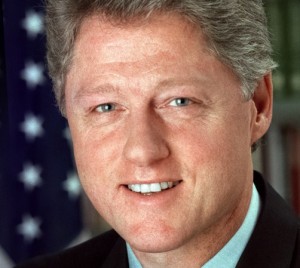
Bill Clinton

Bill Clinton

William Jefferson (Bill) Clinton (born Hope, Arkansas, 1946) was the forty-second president of the United States. Before he was president, he served first as Arkansas’s state attorney general and then as its governor. He has concerned himself with issues such as health care, NAFTA, and the family leave bill. Children can visit a website at: Bill Clinton.

Ogden Nash (born Rye, New York, 1902; died Baltimore, Maryland, May 19, 1971) was a poet. He enjoyed writing humor. Children could read some of his poetry at: Ogden Nash Poems. Then they could write their own humorous verses.

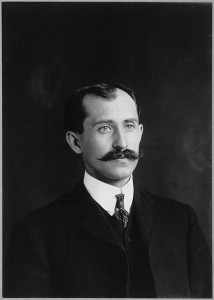
Orville Wright

Orville Wright

Orville Wright (born Dayton, Ohio, 1871; died Dayton, Ohio, January 30, 1948) flew the first airplane on December 17, 1903. His birthday has been proclaimed National Aviation Day since 1939. Children could view an excellent timeline of his life and his brother’s life at: Orville Wright.

Aug 202025
 

Vitus Bering (born Horsens, Jutland, Denmark, 1680; died Bering Island, December 19, 1741) was an explorer. He confirmed that water separated Asia and North America. He also claimed land now known as Alaska for Russia. Heavy fogs forced him to land on Bering Island as he was trying to return to Russia. He died of scurvy on the island. Idea: Children know that Bering Island is named after him; they could find out what two other geographic features bear his name. They could also learn more at: Vitus Bering.

Benjamin Harrison

Benjamin Harrison

Benjamin Harrison (born North Bend, Ohio, 1833; died Indianapolis, Indiana, March 13, 1901) was the twenty-third president (1889-1893) of the United States. He was the grandson of William Henry Harrison, the ninth president of the United States. During the Civil War he was a brigadier general. He served in the United States Senate, representing Indiana. Although he lost the popular vote, he won the Electoral College vote and became president. He compared the White House to a jail. During his presidency, six new states were admitted to the Union. Children could visit a website at: Benjamin Harrison. They could find out which six states were added to the Union during his presidency.

Judith Byron Schachner (born Waltham, Massachusetts, 1951) writes and illustrates books for children. Her books include the Skippyjon Jones series and Willy and May. She also illustrates books written by other authors. Children can visit her website at: Judith Byron Schachner.

Aug 212025
 

Kwame Alexander (born New York, New York, 1968) writes children’s books and poetry. His verse novel The Crossover earned him the 2015 Newbery Medal. That book also received a Coretta Scott King Author Honor Award. He also earned a 2020 Newbery Honor Award for The Undefeated. Children can learn more at: Kwame Alexander.

William “Count” Basie (born Red Bank, New Jersey, 1904; died Hollywood, Florida, April 26, 1984) was a composer, pianist, and bandleader who loved jazz.

X. J. Kennedy (born Dover, New Jersey, 1929) writes poetry and novels for both adults and children. His children’s books include Elefantina’s Dream and Uncle Switch: Loony Limericks.

Arthur Yorinks (born Roslyn, New York, 1953) writes and directs plays and operas. He has also written at least 40 books for children. he wrote Hey, Al, which earned illustrator Richard Egielski the 1987 Caldecott Medal. Older children can learn more at: Arthur Yorinks.

Aug 222025
 

Ray Bradbury (born Waukegan, Illinois, 1920; died Los Angeles, California, June 5, 2012) was an author. One of his most famous works is Fahrenheit 451. His other works include The Martian Chronicles and The Illustrated Man. One of his greatest short stories is “A Sound of Thunder.” Older children could learn more at: Ray Bradbury.

Claude Debussy (born St. Germain-en-Laye, France, 1862; died Paris, France, March 25, 1918) was a composer and musician.

Will Hobbs (born Pittsburgh, Pennsylvania, 1947) has written at least 20 novels for young adults. He received the 1998 Edgar Award for Ghost Canoe. Other books include The Maze and Beardance. Young adults could visit his website at: Will Hobbs.

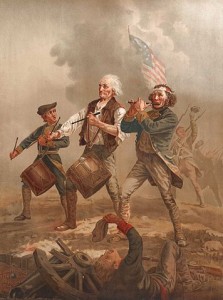
The Spirit of '76

The Spirit of ’76

Archibald M. Willard (born Bedford, Ohio, 1836; died Cleveland, Ohio, October 11, 1918) was a painter. Perhaps his most famous works is The Spirit of ‘76. 

Aug 232025
 

Melvin Berger (born Brooklyn, New York, 1927) has written over 200 books for children. His works include Germs Make Me Sick! and Is a Dolphin a Fish?

Edgar Lee Masters (born Garnett, Kansas, 1869; died Melrose Park, Pennsylvania, March 5, 1950) was a writer. One of his most famous works is Spoon River Anthology, which children will find, along with some of his other works, at: Project Gutenberg.

Commodore Oliver Hazard Perry (born South Kingston, Rhode Island, 1785; died at sea on August 23, 1819) was a naval commander. During the Battle of Lake Erie in 1813, he stated, “We have met the enemy, and they are ours.”

Aug 242025
 

John Green (born Indianapolis, Indiana, 1977) writes fiction for young adults. He received the 2006 Michael Printz Award for Looking for Alaska. His Paper Towns earned the 2009 Edgar Award. Young adults could visit his website at: John Green.

Dean Hughes (born Ogden, Utah, 1943) has published at least 100 books for children and young adults. His works include Soldier Boys and Winning Streak.

Gregory Jarvis (born Detroit, Michigan, 1944; died in the Challenger implosion, January 28, 1986) was an astronaut. He was a payload specialist on STS 51-L. Children could learn more at: Gregory Jarvis.

Aug 252025
 

Leonard Bernstein (born Lawrence, Massachusetts, 1918; died New York, New York, October 14, 1990) was a conductor and a composer. One of his musicals was West Side Story.

Ian Falconer (born Ridgefield, Connecticut, 1959; died Norwalk, Connecticut, March 7, 2023) was an illustrator, a children’s author, and a theater set designer. He wrote and illustrated the Olivia series, and he received a 2001 Caldecott Honor Award for Olivia.

Charles Ghigna (born Queens, New York, 1946) writes poetry for children. Sometimes called Father Goose, he has written at least 100 books, including The Alphabet Parade and I See Spring. He has written more than 5000 poems! Children can visit his website at: Charles Ghigna.

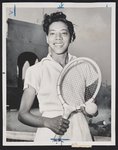
Althea Gibson

Althea Gibson

Althea Gibson (born Silver, South Carolina, 1927; died East Orange, New Jersey, September 28, 2003) was the first African American (of either sex) to play international tennis. She was also the first African American to win the women’s singles tournament at Wimbledon. She won the tournament in 1957 and returned to a ticker tape parade in New York. Idea: Children could find out how one qualifies for Wimbledon.

Bret Harte (born Albany, New York, 1836; died London, England, August 2, 1902) was a writer known especially for his tales of the American West. One of his most famous works is “The Outcasts of Poker Flat,” written in 1869. He completed “The Luck of Roaring Camp” in 1868. Children can read many of his works at: Project Gutenberg.

Walt Kelly (born Philadelphia, Pennsylvania, 1913; died Hollywood, California, October 18, 1973) was a cartoonist. He is famous for his character, Pogo.

Lane Smith (born Tulsa, Oklahoma, 1959) writes and illustrates books for children. The Stinky Cheese Man and Other Fairly Stupid Tales, written by Jon Scieszka earned Smith a 1993 Caldecott Honor Award. He earned another Caldecott Honor Award in 2012 for Grandpa Green. Children could visit his website at: Lane Smith.

Aug 262025
 

Lee de Forest (born Council Bluffs, Iowa, 1873; died Hollywood, California, June 30, 1961) was called the “Father of Radio.” The owner of hundreds of patents, de Forest also worked on the photoelectric cell, talking films, and television. Idea: Children could find out why he was arrested.

Carl Deuker (born San Francisco, California, 1950) writes novels for young adults. His work includes Gym Candy and Heart of a Champion. Young adults can visit his website at: Carl Deuker.

Antoine-Laurent Lavoisier (born Paris, France, 1743; executed Paris, France, May 8, 1794) is known as the “founder of modern chemistry.” He studied the processes of combustion and also plant respiration. He established a method of naming chemicals that is still used today. Idea: Older children could find out why he was executed. Children could learn more at: Lavoisier.

Albert Bruce Sabin (born Bialystok, Poland, 1906; died Washington, DC, March 3, 1993) created an oral polio vaccine. It replaced the vaccine developed by Jonas Salk. Sabin’s vaccine provided lifetime protection and could be swallowed. Salk’s vaccine had to be injected and had to be repeated. In 1971 Sabin received the United States National Medal of Science.

Bernard Wiseman (born Brooklyn, New York, 1922; died January 11, 1995) wrote at least 80 books for children. He is well-known for his Morris and Boris series.

Aug 272025
 

Confucius (born Lu, China, 551 BC; died 479 BC) was a great Chinese philosopher. His philosophy stresses proper relationships with others and personal responsibility. Children could read Confucius: The Golden Rule by Russell Freedman.

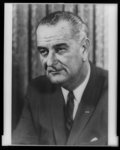
Lyndon Baines Johnson

Lyndon Baines Johnson

Lyndon B. Johnson (born near Stonewall, Texas, 1908; died San Antonio, Texas, January 22, 1973) was the 36th president (1963-1969) of the United States. He fought during World War II and was awarded the Silver Star. After the war, he was elected first to the House of Representatives and then to the Senate. He represented the state of Texas. He soon became the Senate Majority Leader. He was John Kennedy’s vice president and became president when Kennedy was assassinated. Important issues included the War on Poverty and the civil rights movement. The Vietnam War divided the country emotionally, and he did not seek another term in office. Children could visit a website at: Lyndon Johnson.

Suzy Kline (born Berkeley, California, 1943) has written at least 47 books for children. She is the author of the Horrible Harry books and the Herbie Jones series. Children could visit her website, filled with great actvities and readers’ theater possibilities, at: Suzy Kline.

Arlene Mosel (born Cleveland, Ohio, 1921; died Indianapolis, Indiana, May 1996) was a librarian and author. She is most known for writing Tikki Tkki Tembo and The Funny Little Woman. Blair Lent received the 1973 Caldecott Medal for the illustrations in the latter book.

Ann Rinaldi (born New York, New York, 1934; died Branchburg, New Jersey, July 1, 2021) wrote more than 40 books for children. Her works include Girl in Blue and The Redheaded Princess.

Suzanne Fisher Staples (born Philadelphia, Pennsylvania, 1945; died Nicholson, Pennsylvania, April 29, 2022) wrote books for children. Her works include Shabanu, which received a 1990 Newbery Honor Award. She also wrote The House of Djinn.

Mother Teresa (born Agnes Gonxha Bojaxhiu in Skopje, Yugoslavia, 1910; died Calcutta, India, September 5, 1997) was a missionary working with the poor in India. She received the Nobel Peace Prize in 1979 for her work. Children could read Mother Teresa by Demi.

Aug 282025
 

Roger Duvoisin (born Geneva, Switzerland, 1904, died Morristown, New Jersey, June 30, 1980) wrote and/or illustrated approximately 30 books for children. One of his main characters in a series was Petunia. He received the 1948 Caldecott Award for White Snow, Bright Snow. He also earned a 1966 Caldecott Honor Award for Hide and Seek Fog. Children could learn more at: Roger Duvoisin.

Johann Wolfgang von Goethe (born Frankfurt am Main, Germany, 1749; died Weimar, Germany, March 22, 1832) was a philosopher, scientist, and writer. One of his greatest works is the verse play Faust. Older children can read many of his works at: Project Gutenberg.

Kevin Hawkes (born Sherman, Texas, 1959) has written and/or illustrated at least 50 books for children. He illustrated Imagine That: How Dr. Seuss wrote The Cat in the Hat and Library Lion. Children can visit his webpage at: Kevin Hawkes.

Lucy Ware Webb Hayes

Lucy Ware Webb Hayes (born Chillicothe, Ohio, 1831; died Fremont, Ohio, June 25, 1889) was America’s First Lady from March 4, 1877 to March 4, 1881. She was the wife of Rutherford B. Hayes, nineteenth president of the United States. She visited the Civil War battle sites to care for the wounded. She served as first lady of Ohio when her husband was elected governor. Because she believed in the temperance movement, alcohol was not served in the White House. Children can visit a website at: Lucy Ware Webb Hayes.

Brian Pinkney (born Boston, Massachusetts, 1961) writes and illustrates books for children. His illustrations in When I Left My Village earned him the 1996 Sydney Taylor Older Reader Award. He received a 1996 Caldecott Honor Award for The Faithful Friend and a 1999 Caldecott Honor Award for Duke Ellington: The Piano Prince and His Orchestra. He has earned four Coretta Scott King Honor Awards: in 1993 for Sukey and the Mermaid, in 1996 for The Faithful Friend, in 1997 for Minty: A Story of Young Harriet Tubman, and in 2005 for God Bless the Child. He received the 2000 Coretta Scott King Medal for In the Time of the Drums. Children could visit his website at: Brian Pinkney.

Allen Say (born Yokohama, Japan, 1937) has written and/or illustrated at least 30 books for children. His book Grandfather’s Journey received the 1994 Caldecott Medal. His works also include Home of the Brave and Drawing from Memory.

Tasha Tudor (born Boston, Massachusetts, 1915; died Marlboro, Vermont, June 18, 2008) wrote and/or illustrated almost 100 books for children. She earned the 1945 Caldecott Medal for Mother Goose and the 1957 Caldecott Medal for 1 is One.