International Hot and Spicy Food Day is today! Scientists have found evidence that people as long ago as 6000 years were adding spices to their foods. Idea: Children could list hot and spicy dishes that they enjoy!
Jan 162026
International Hot and Spicy Food Day is today! Scientists have found evidence that people as long ago as 6000 years were adding spices to their foods. Idea: Children could list hot and spicy dishes that they enjoy!
Soyuz 4 and Soyuz 5, both Soviet space craft, docked and conducted the first transfer of crew members in space in 1969. The transfer actually happened through a space walk. The transfer was successful, but the return of Soyuz 5 was truly amazing. The cosmonaut in Soyuz 5 barely survived a landing that would make a great movie. Idea: The children could research the problems of space docking and returning to earth.
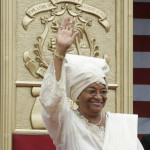 Ellen Johnson Sirleaf became the 24th president of Liberia in 2006. She won the 2005 elections and was re-elected in 2011. She, with Leymah Gbowee of Liberia and Tawakel Karman of Yemen, received the 2011 Nobel Peace Prize for their nonviolent work to help women. Educated in the United States, Sirleaf is the first elected female head of state of an African country. Her term of office ended January 22, 2018. Older children could learn more at: Ellen Johnson Sirleaf.
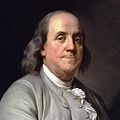
Ben Franklin
Kid Inventors’ Day is today! This day was chosen because it is Benjamin Franklin’s birthday. Franklin was a prolific inventor, creating bifocals, the Franklin stove, and even Daylight Saving Time. Children can learn more at: http://www.kidinventorsday.com/.
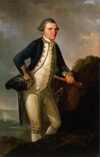
James Cook
James Cook in 1773 became the first person to cross the Antarctic Circle. Sailing on the Resolution, Cook crossed the Antarctic Circle twice more on the voyage. On the same trip he visited a number of locations, including Easter Island, Tahiti, and the New Hebrides. Children could learn more at: James Cook.
James Madison Randolph was born in 1806 in the White House. The grandson of Thomas Jefferson, he was the first child born in the White House. Only one other child was born IN the White House. Who could that person be? Children could find out more about the White House at: White House.
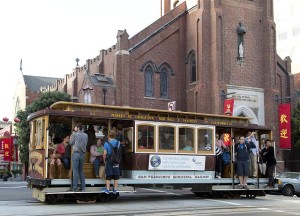
Cable Car
Cable car was patented by Andrew Hallidie in 1871. San Francisco’s hilly terrain made transportation difficult for the horse-drawn carriages. Hallidie’s invention made life better for both people and horses. By 1920 most cities had changed to the cable car system. Children can learn more at: Cable Car.
World Snow Day is today! Celebrated on the third Sunday in January, the day encourages all to enjoy the joys of snow. It was founded by the International Ski Federation. It was first celebrated informally in 2010 and then formally in 2012. Idea: Children could go outside to sled, make snow people, or make snow angels.
 Polar bear was put on display in Boston, Massachusetts, in 1733. Idea: Children could discuss why this would be a very big event for that time period. Carnivores, polar bears are becoming rare. Today scientists estimate 20,000 to 25,000 polar bears exist. Experts believe that by 2050 that number will be cut in half. Children can learn more about polar bears and see some great photos at: Polar Bears. Interesting coincidence – Raymond Briggs, born on January 18th, wrote a book in 1994 about a polar bear called The Bear. It was made into a short animated video.
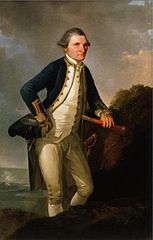
James Cook
James Cook discovered Hawaiian Islands in 1778. He called the islands the Sandwich Islands to honor John Montagu, Fourth Earl of Sandwich and one of Cook’s sponsors. Remember that on January 17, 1773, James Cook crossed the Antarctic Circle – Busy man! Children can learn more at: James Cook.