Robert Fulton’s first steamboat North River Steamboat, also known as the Clermont, was operated for the first time in 1807. It traveled between Albany and New York City. At first called “Fulton’s Folly,” the ship cruised the 150-mile stretch in 32 hours.

Double Eagle II
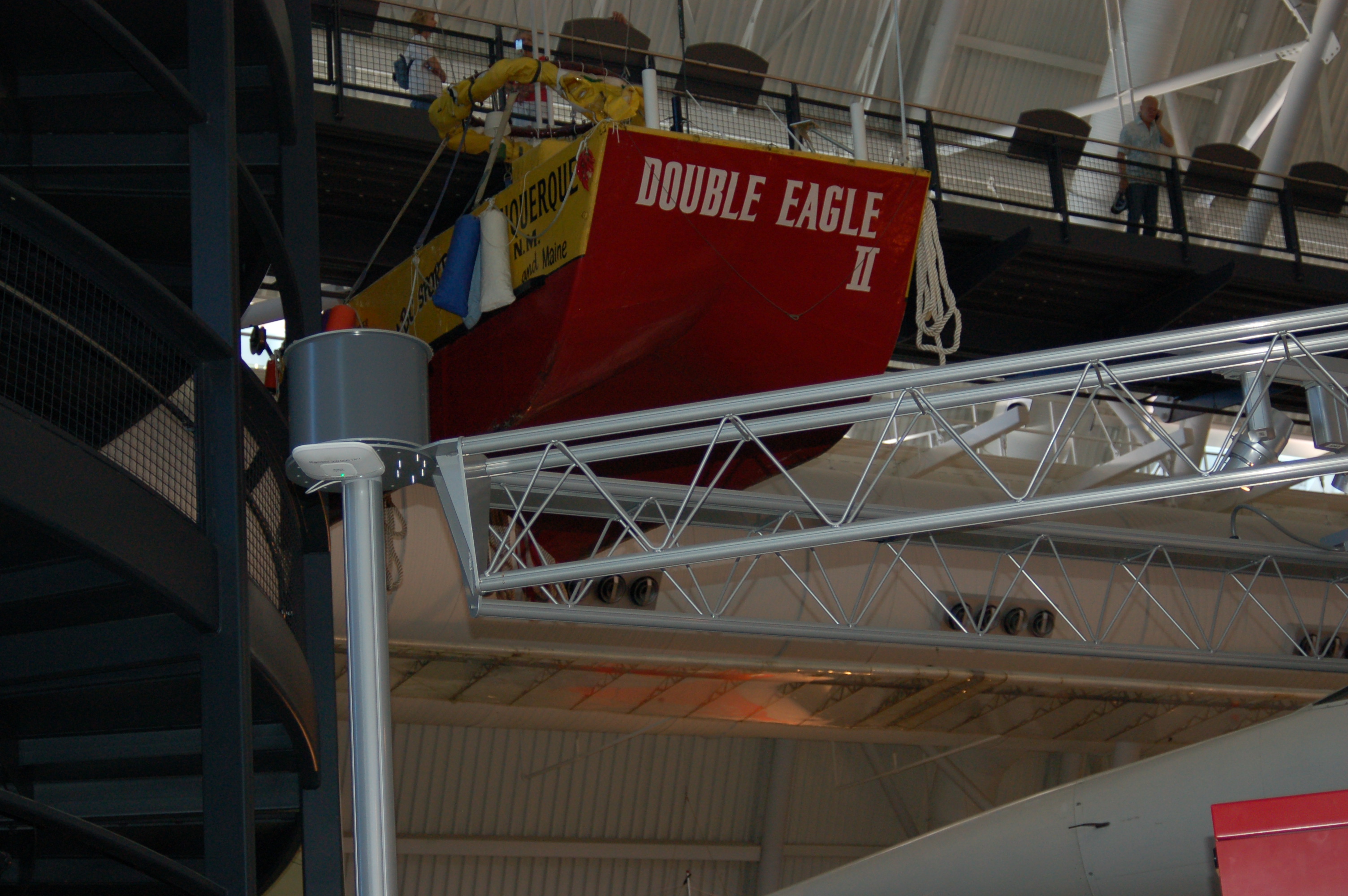
Double Eagle II landed in Miserey, France, in 1978. The balloon and its crew, Larry Newman, Ben Abruzzo, and Max Anderson, had left Presque Island, Maine, on August 11, 1978. The balloon was the first one of its kind to travel across the Atlantic Ocean, and the three balloonists instantly became heroes. Idea: Children could list the difficulties the crew faced. For example, where did they sleep? Older children can learn more at: Double Eagle II.
Davy Crockett (born Hawkins County, Tennessee, 1786; died at the Alamo, March 6, 1836) was an adventurer and a frontier fighter. He represented the state of Tennessee in the House of Representatives from March 4, 1833 to March 4, 1835. Idea: Children could make a timeline of Davy Crockett’s life. Older children could read his autobiography, A Narrative of the Life of Davy Crockett, of the State of Tennessee, at: Project Gutenberg.
Myra Cohn Livingston (born Omaha, Nebraska, 1926; died Los Angeles, California, August 23, 1996) wrote books of poetry for children. Her works include Celebrations and Sky Songs. Children can learn more at: Myra Cohn Livingston.
Geneva Grace Stratton-Porter (born near Wabash, Indiana, 1863; died Los Angeles, California, December 6, 1924) wrote books for children. She also wrote articles for magazines, and she was one of the first woman movie producers. Her books include Keeper of the Bees and A Girl of the Limberlost. Children can learn more at: Geneva Grace Stratton-Porter. Children can read many of her works at: Project Gutenberg.
On this day, two events connecting John White and Roanoke occurred:
- Virginia Dare in 1587 was the first child of Europeans to be born in the colonies. Her grandfather was John White, a leader of the Roanoke colony. He and his group had arrived at Roanoke on July 22. He returned to England for more supplies and more people. However, wars and other events delayed his voyage back.
- John White came back to Roanoke on August 18, 1590 to find that the Roanoke colony (and his granddaughter) had disappeared. Children could learn more at: Lost Colony

Phobos
Phobos, one of the two moons of Mars, was discovered by Asaph Hall of the United States Naval Observatory in 1877. The moon was named after the Greek god Phobos, meaning fear. The small moon actually orbits Mars faster than Mars rotates. Experts believe Phobos may eventually break apart and form a ring around Mars. Children could learn more at: Phobos.
Women’s Air Derby took place in 1929. Also called the Powder Puff Derby by Will Rogers, this race was the first women-only flying competition. Twenty pilots left Santa Monica, California, on either August 18 or 19. They made eleven stops before they finished in Cleveland, Ohio. Most of the women completed the competition. Louise Thaden won the race in the heavier airplane competition, landing in Cleveland on August 26, 1929. Phoebe Omlie won the lighter airplane competition.

Rosalynn Carter
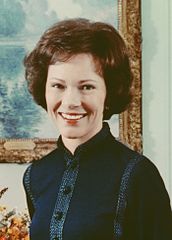
Rosalynn Smith Carter (born Plains, Georgia, 1927; died Plains, Georgia, November 19, 2023) was America’s First Lady from January 20, 1977 to January 20, 1981. She was the wife of Jimmy Carter, thirty-ninth president of the United States. While she was First Lady, she devoted much of her time to the performing arts. She also held a post on the President’s Commission on Mental Health. She was the second longest living First Lady. Children could visit a website at: Rosalyn Smith Carter. Idea: They could find out if the Secret Service protects former First Ladies.
Roberto Clemente (born Carolina, Puerto Rico, 1934; died San Juan, Puerto Rico, December 31, 1972) was a baseball player. He joined the Pittsburgh Pirates and spent his entire career with them. He was killed in a plane crash while trying to deliver supplies to Nicaragua. An earthquake there had devastated parts of the country. He became a member of the Baseball Hall of Fame in 1973. Children could learn more at: Roberto Clemente.
Paula Danziger (born Washington, DC, 1944; died New York, New York, July 8, 2004) wrote more than 30 children’s books. She is well known for her Amber Brown series. After Danziger died, her two close friends, Bruce Coville and Elizabeth Levy, wrote more Amber Brown books in her style. Children could learn more at: Paula Danziger.
Louise Fatio (born Lausanne, Switzerland, 1904; died New Jersey, July 26, 1993) wrote books for children. Her husband, Roger Duvoisin, illustrated many of her works. Her books include Happy Lion and Happy Lion and the Bear.
Sonia Levitin (born Berlin, Germany, 1934) has written at least 37 books for children and young adults. Incident at Loring Groves earned a 1989 Edgar Award, and The Return received a 1987 Sydney Taylor Book Award. Children could learn more at: Sonia Levitin.

Meriwether Lewis
Meriwether Lewis (born Albemarle County, Virginia, 1774; died near Nashville, Tennessee, October 11, 1809) was half of the famous Lewis and Clark expedition. He later became governor of the Louisiana Territory. Older children might be able to solve the mystery surrounding Lewis’s death. They could read Meriwether Lewis: Off the Edge of the Map, by Geoff Benge and Janet Benge. They could read his journals at Project Gutenberg.

National Aviation Day
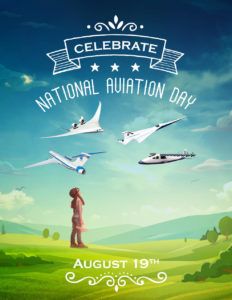
National Aviation Day is today. The day honors the birth of Orville Wright, the first of the brothers to fly a plane at Kitty Hawk. President Franklin Roosevelt first proposed the day in 1939. Children could celebrate the day by making and flying paper airplanes.

Flag of Afghanistan
Afghanistan celebrates Independence Day. In 1919 Afghanistan gained its freedom from the United Kingdom. Slightly smaller than the state of Texas, land-locked Afghanistan has an arid to semi-arid climate. Its natural resources include metals and petroleum. Over 31 million people live there, and Kabul is the capital.

Indianapolis 500 Early Days
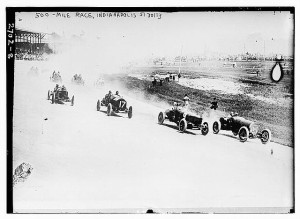
Indianapolis 500 Race Track opened in 1909. It went through significant changes to be the race track it is today.
All-American Soap Box Derby was held for the first time in Dayton, Ohio, in 1934. The race was moved to Akron, Ohio, in 1935 because the city had more hills. Today the race is still held in Akron, and all cars must be unpowered. However, the science behind the scenes is amazing! Children can learn more at: Soap Box Derby