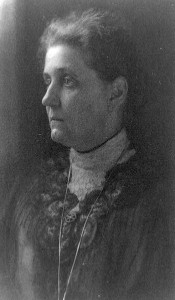
Jane Addams
Jane Addams (born Cedarville, Illinois, 1860; died Chicago, Illinois, May 21, 1935) was an activist for social welfare and women’s rights. She founded Hull House and was the co-winner of the Nobel Peace Prize in 1931. Children could read The House that Jane Built, written by Tanya Lee Stone and illustrated by Kathryn Brown. The Jane Addams Children’s Book Award was created in her honor in 1953. The award recognizes books that promote peace, equality for minority groups, world issues, and equality for both men and women. Children could learn more about Jane Addams and the Jane Adams Children’s Book Award from Children’s Book Award Handbook, by Diana F. Marks.
John Dalton (born Eaglesfield, England, 1766; died Manchester, England, July 27, 1844) was a scientist. He is known for his work in atomic theory and in research regarding color blindness.
Tony DiTerlizzi (born Los Angeles, California, 1969) writes and illustrates books for children. He co-wrote the Spiderwick Chronicles with Holly Black. He earned a 2003 Caldecott Honor Award for The Spider and the Fly. Children can visit his website at: Tony DiTerilizzi.
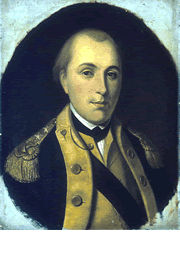
Marquis de Lafayette
Marquis de Lafayette (born Marie-Joseph-Paul-Yves-Roch-Gilbert du Motier in Chavaniac, France, 1757; died Paris, France, May 20, 1834) was called “The Hero of Two Worlds.” He contributed to the American Revolution by convincing Louis XVI to send men to fight. He attained the rank of major-general and helped force Cornwallis to surrender at Yorktown. He returned to France and drafted “A Declaration of the Rights of Man and of the Citizen.” Children could read Russell Freedman’s Lafayette and the American Revolution.
Felix Salten (born Budapest, Hungary, 1869; died Zurich, Switzerland, October 8, 1945) was an author. His most famous book is Bambi. Children could learn more at: Felix Salton.
Jessie Willcox Smith (born Philadelphia, Pennsylvania, 1863; died Philadelphia, Pennsylvania, May 3, 1935) was a prolific illustrator. Her illustrations appeared in over 250 periodicals, on 200 magazine covers, and in 60 books. Some of her most well-know children’s book illustrations include Heidi by Johanna Spyri and Little Women by Louisa May Alcott.
 Today is Labor Day, a holiday and the unofficial end to summer. The holiday was probably first observed in 1882 in New York City by the Carpenters and Joiners Union. The holiday grew in popularity, and over half the states were celebrating Labor Day by 1893. President Grover Cleveland made it a legal holiday in 1894. Children can learn more at:

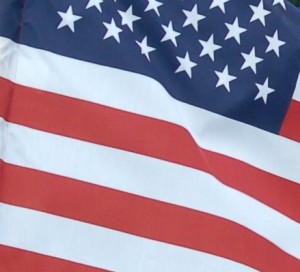 Pledge of Allegiance was read publicly for the first time in 1892. Francis Bellamy wrote it so that people could declare their patriotism. It has undergone four changes, and it was formally adopted by Congress in 1942.